

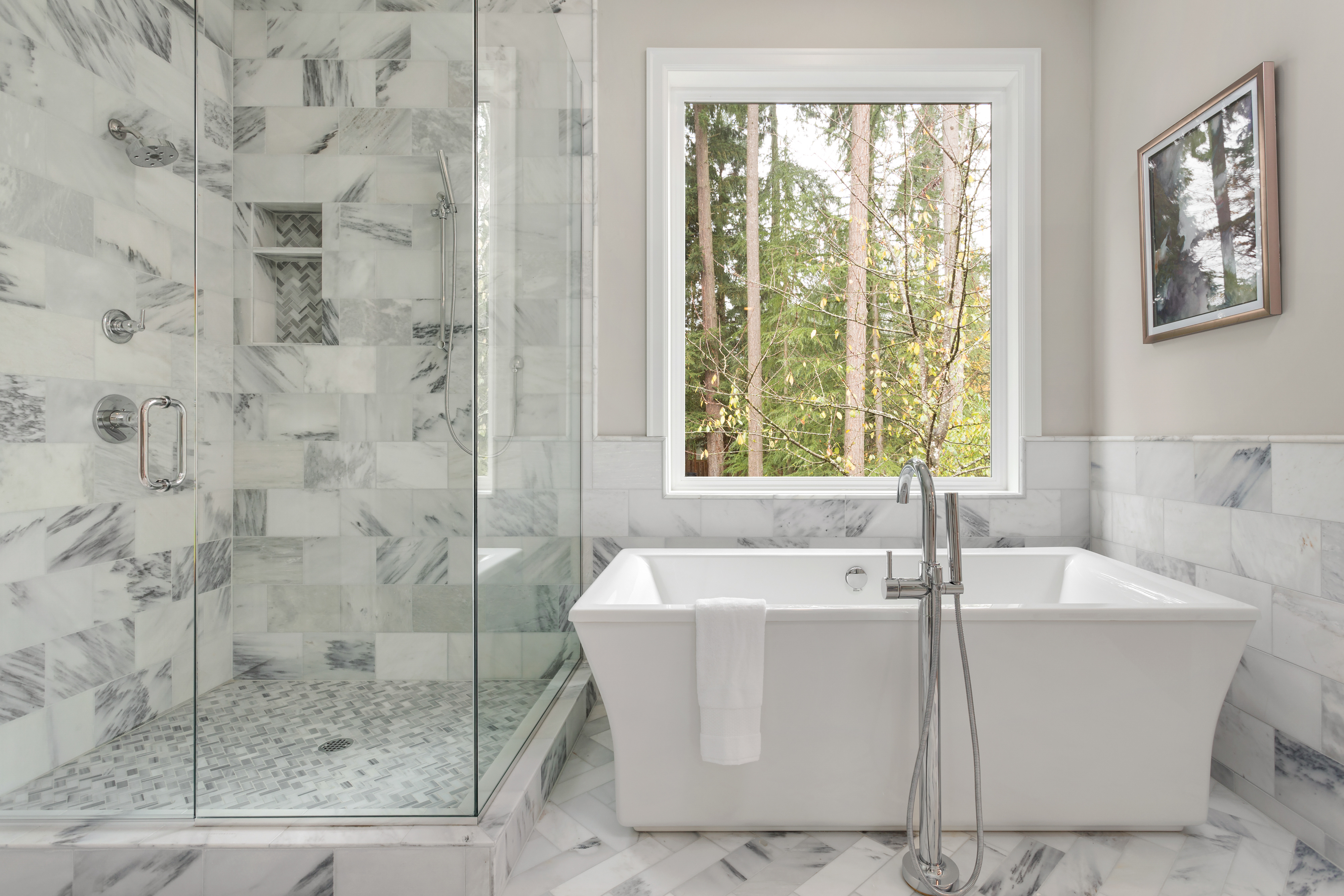
The bathroom is the most dangerous room in the house for a fall, and that fact should shape how you choose stone for it. In 2008 an estimated 234,094 Americans aged 15 and older were treated in emergency rooms for bathroom injuries, a rate of 96.4 per 100,000 people. The U.S. Centers for Disease Control and Prevention, which tracks these numbers through a national injury database, found that 81.1% of those injuries came from falls, and that the highest rate of all, 65.8 per 100,000, was in and around the tub or shower. More than a third of the injuries, 37.3%, happened while bathing, showering, or getting in and out. Natural stone can be beautiful and long-lasting in a wet room, but whether it's safe and whether it stays sealed and dry comes down to details most showrooms never mention: the finish underfoot, the waterproofing behind it, and the chemistry of what you wash with. Here's what actually matters.
Is Natural Stone a Good Idea in a Shower or Bathroom?
Natural stone works well in a shower or bathroom when the stone, the finish, the waterproofing, and the sealing are all chosen for a wet room, and it goes wrong when any one of them is treated as an afterthought. Stone in a bath is really an engineering decision wearing a design decision's clothes. The look is the easy part. The parts that decide whether you love the floor in five years are how much grip it has when wet, whether water is being stopped behind it, and how it handles the acids and constant moisture a bathroom throws at it. Get those right and stone is a floor that outlives the house; get them wrong and it turns slick, stained, or loose.
The Slip Problem: Polished Stone and Wet Feet
A polished stone floor is one of the slipperiest surfaces you can stand on wet, so the finish matters more than the stone in a bathroom. There is a measured standard for this. The tile and stone industry's slip test, ANSI A326.3, reports a number called dynamic coefficient of friction, or DCOF, which is simply how much grip a surface offers against a sliding foot. For any floor expected to be walked on while wet, it sets a wet DCOF of at least 0.42, with the minimum climbing toward 0.55 for wetter or oilier spaces. A high-polish marble or travertine, gorgeous as it is, generally doesn't reach even the 0.42 mark once it's wet and soapy.
The fix is finish and format rather than a different stone. A honed finish, which is ground flat but not buffed to a shine, gives far more grip than a polish, and textured or flamed finishes give more still. Smaller tiles or mosaics on a shower floor help too, because all those extra grout lines break up the surface and give feet something to catch. If you want to understand the grip numbers before you choose, our guide to what slip-resistance ratings really mean breaks the DCOF scale down in plain terms.
Water Doesn't Stop at the Tile: What Goes Behind the Stone
The stone and grout you can see are not what keep a shower wall dry, and believing they are is the most expensive mistake in a stone bathroom. Tile and stone surfaces are not waterproof. On a cement grout, as Custom Building Products explains in its technical guidance for the trade, water works its way through the microscopic capillaries in the grout and reaches the wall behind. What actually keeps the structure dry is a bonded waterproof membrane installed behind the stone, and the tile industry's ANSI A118.10 standard is the specification that membrane has to meet.
A stone shower is only as good as the waterproofing under it. A membrane that meets ANSI A118.10, run continuously behind the stone and lapped correctly at the corners and the pan, is the difference between a shower that lasts decades and one that rots the wall behind it while looking fine from the front. That membrane is invisible when the job is done, which is exactly why it gets skipped on a cut-rate install. When stone goes into a wet room, the waterproofing under it is not the place to save money, and it is the first thing to ask any installer about.
Sealing, Etching, and the Bath Products That Dull Stone
Sealing a stone bathroom guards against stains but not against etching, and the two get confused constantly. A penetrating sealer soaks into the stone and slows how fast liquids absorb, which buys you time against a stain. It forms no film on top, though, so it cannot stop an acid etch, and it does not make the stone waterproof. Marble, travertine, and limestone are calcareous stones, made of calcium carbonate, and the Natural Stone Institute, the trade body behind the U.S. stone-care standards, warns that acids will dull or etch them.
A bathroom is full of those acids, which is the part nobody mentions. Many shampoos, cleansers, and toiletries are mildly acidic, and so are a lot of the tub-and-tile cleaners people reach for, so a marble shower can slowly lose its polish from daily use even when it is sealed and spotless. The defense is a neutral, stone-safe cleaner, wiping products off the stone rather than letting them run down it, and choosing an acid-resistant siliceous stone like granite or slate for a bathroom that sees heavy use. A honed finish helps here too, since a surface that was never mirror-shiny does not show etching the way a polish does.
Which Stones Hold Up Wet, and Which to Think Twice About
The stones that do best in a wet room are the hard, less porous, acid-resistant ones, and the ones to weigh carefully are the soft, porous, calcareous ones. Granite and slate are siliceous, so they shrug off the acids that etch marble and tend to be denser and more forgiving in a shower. Quartzite is similarly tough. Marble is the classic bathroom stone and can absolutely work, but it wants a honed finish, diligent sealing, and an owner who accepts that it will develop a lived-in patina over the years.
Travertine is the one that surprises people. It is naturally full of small holes, which are usually filled at the factory, but in a wet area those fills can pop and the stone can hold water in its pockets, so it needs to be well filled, sealed, and maintained to do well in a shower. Limestone is soft and porous in the same way. None of these stones is disqualified from a bathroom, but the softer and more porous the stone, the more the finish, sealing, and upkeep have to make up the difference. You can see the range of options in the natural stone we carry and match the stone to how hard the room gets used.
Grout and Mold in a Stone Shower
Grout is where a stone shower most often shows its age, because standard cement grout is porous and holds the moisture that grows mildew. The grout lines take on water, and in the constant damp of a shower that is exactly where mold and mildew settle in and darken. Sealing cement grout and keeping it sealed slows that down. For a shower build, an epoxy grout, which is denser and does not absorb water the way cement grout does, resists staining and mildew far better, at the cost of being harder to install.
Upkeep does the rest. Squeegee or wipe the stone after showers to cut how long water sits on it, run the exhaust fan to pull humidity out, and clean with a neutral, stone-safe product rather than an acidic bathroom spray. Our guide to cleaning grout and knowing when to re-grout covers how to keep those lines from becoming the weak point. Stay on top of the grout and a stone shower keeps looking clean; ignore it and the grout gives out long before the stone does.
Natural Stone in Wet Areas at a Glance
Here is how the common bathroom stones sort out on the things that actually decide how they do in a wet room. Finish and installation can shift these, but this is the starting point.
| Stone | Family | Etches from acid? | Porosity | Best use in a bath |
|---|---|---|---|---|
| Granite | Siliceous | No | Low when sealed | Floors and heavy-use showers; honed for grip |
| Slate | Siliceous | No | Low to moderate | Naturally textured, good grip underfoot |
| Marble | Calcareous | Yes | Moderate | Works honed and sealed; expect a patina |
| Travertine | Calcareous | Yes | High (natural voids) | Only if well filled, sealed, and maintained |
| Limestone | Calcareous | Yes | High | Low-use baths; needs diligent sealing |
Common Questions About Natural Stone in Showers and Baths
Is natural stone slippery in a shower?
Polished stone is slippery when wet, but the finish fixes that. The tile and stone slip standard, ANSI A326.3, asks for a wet DCOF of at least 0.42 on floors that get walked on wet, and a honed, textured, or flamed finish gets stone there where a high polish does not. Smaller tiles with more grout lines add grip on a shower floor too.
Does sealing make natural stone waterproof?
No. A penetrating sealer slows how fast liquids soak into the stone, which helps against stains, but it forms no waterproof layer and does not stop acid etching. The real water barrier in a stone shower is a bonded waterproof membrane behind the stone, built to the ANSI A118.10 standard, not the sealer on the surface.
Can you use marble in a shower?
Yes, marble can go in a shower, with the right expectations. Choose a honed rather than polished finish for grip and to hide etching, seal it and keep it sealed, wipe it down after use, and clean it only with a neutral stone-safe product. Marble is calcareous, so acidic bath products will slowly dull an unprotected surface, and it will develop a soft patina over time.
What is the best natural stone for a bathroom?
For a hard-working bathroom, a siliceous stone like granite or slate is the most forgiving choice, because it resists the acids that etch marble and tends to be denser and less porous. Marble and travertine are beautiful and workable, but they need a honed finish, careful sealing, and more upkeep. The right pick depends on how heavily the room is used and how much maintenance you want.
Why does my travertine shower keep getting pitted or holding water?
Travertine is naturally full of small holes that are filled at the factory, and in a shower those fills can work loose and the stone can hold water in the open pockets. The fix is to have the voids properly refilled and the stone resealed, then keep up with sealing. It is why travertine needs more attention in a wet area than a denser stone does.
Planning a Stone Shower or Bath in Sterling Heights
A natural stone bathroom rewards getting the unglamorous parts right: a finish with grip underfoot, a waterproof membrane behind the stone, sealing that matches the stone, and a cleaning routine that keeps acids off it. Choose the stone for how the room actually gets used, not just for the sample that catches your eye, and make sure whoever installs it treats the waterproofing as seriously as the tile work. When you are ready to look at stone that fits your bathroom and your household, request a free in-home consultation and we will bring samples to you, talk through finishes and sealing, and help you put stone in your bath that stays safe, dry, and beautiful for the long haul.