

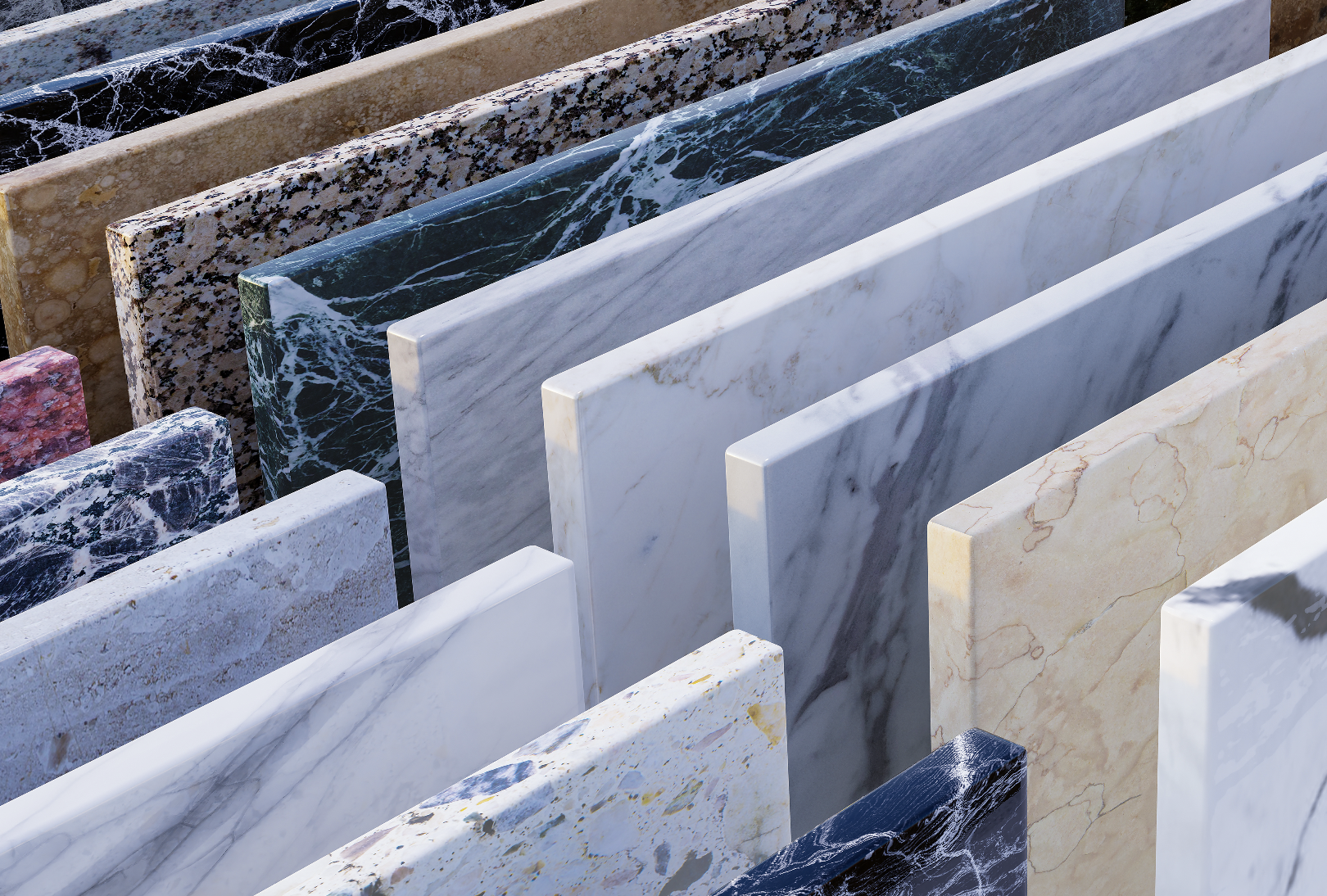
MSI and Daltile are two of the biggest names in American tile and stone, and they reached the top by opposite routes. Daltile is the largest tile manufacturer in the United States, making tile since 1947 and part of the flooring giant Mohawk Industries since 2002. MSI, short for M S International, started in 1975 as a stone distributor and grew into one of the world's top importers of natural stone and surfaces, bringing product in from dozens of countries. Floor 4 Life carries both, and the honest answer to "which is better" is that neither one wins on the name. What matters is matching the right product to your room, and knowing the handful of third-party standards that tell you a tile is what it claims to be. This guide walks through both.
MSI vs. Daltile: What's the Real Difference?
The biggest difference between MSI and Daltile is their business model, and it shapes what each does best. Daltile manufactures its own tile, much of it in North American plants, which tends to mean tight quality control, deep stock of core lines, and quicker restocks when you need more. MSI imports and distributes surfaces from around the world, which tends to mean an enormous range of looks, natural stone from many source countries, and fast-moving trend colors. Both sell excellent tile. One is a maker with a manufacturer's consistency; the other is a global buyer with a distributor's variety.
For a homeowner, that difference rarely decides the project by itself, because both brands cover the main categories: glazed ceramic, porcelain, natural stone, and mosaics, with MSI also strong in quartz countertops. It matters more at the edges. If you want a large job in one consistent line with dependable reordering, a manufacturer's catalog is reassuring. If you are chasing a specific imported marble look or the latest wood-look plank, a global importer's range is hard to beat. We stock both precisely so the choice can come down to the tile, and you can see the Daltile side of what we carry in our Daltile collection.
Daltile: An American Tile Manufacturer
Daltile is first and foremost a domestic manufacturer. It has been making tile since 1947, it is the largest tile manufacturer in the U.S., and since 2002 it has been owned by Mohawk Industries, one of the largest flooring companies in the world. It also owns the American Olean and Marazzi brands, so a lot of tile you will see under different names traces back to the same company. For a buyer, a domestic manufacturer usually means consistent lots, strong availability on staple lines, and a supply chain that is easier to reorder from mid-project.
Where Daltile shines is the dependable, everyday backbone of a tile job: porcelain floor tile, subway and wall tile, and coordinated trim pieces that all belong to the same line. If your project is a full floor or a large area where you may need more tile later and want it to match, a manufacturer's line is a safe foundation. The trade-off is that a maker's catalog, broad as it is, is still narrower than the whole world's output, which is where an importer comes in.
MSI: A Global Importer of Surfaces
MSI is a distributor and importer, and its strength is range. The Shah family founded it in 1975, and by 2008 it was among the top importers of natural stone in the world, sourcing granite, marble, travertine, porcelain, and quartz from source countries across several continents. That global buying is why an MSI display can feel almost endless, and why it tends to carry the natural stone variety and the current trend looks in depth. When a design hinges on a particular imported stone or a specific on-trend finish, an importer's catalog is often where you find it.
MSI is especially known on the natural stone side, which is where it began, so it is a natural fit when a project leans toward real granite, marble, or travertine, or toward quartz countertops to pair with a floor. You can browse the natural stone we carry to see the kind of range that side of the business brings. The thing to remember with any importer is that "imported" spans a wide quality range, so the standards below matter more than the flag on the box.
How to Actually Compare Tile: The Standards That Matter
Once you set brand marketing aside, tile is compared on a few third-party standards that both brands publish, and these tell you far more than a showroom sign. The tile industry runs on numbers, and learning four of them turns you into a sharp shopper no matter whose tile you are looking at. They cover what the tile is, how tough it is, how it grips, and how green it is.
The first is the porcelain definition. Porcelain has a strict, testable meaning: to earn the name, a ceramic tile must absorb 0.5% or less of its weight in water when tested by the ASTM C373 method, the bar set in the ANSI A137.1 tile standard that the whole industry uses. Because some tiles get marketed as porcelain without meeting that bar, the Tile Council of North America and the Ceramic Tile Distributors Association jointly created the Porcelain Tile Certification Agency, or PTCA, and its mark proves a given tile actually clears 0.5%. Porcelain has taken over for good reason, making up more than half of all ceramic tile sold in the U.S. by TCNA and Census figures, because that density is what makes it hard, water-resistant, and tough enough for floors. Both Daltile and MSI carry PTCA-certified porcelain, so the move is to look for the certification on the specific tile.
The second and third are about performance underfoot. PEI rating measures how well a glazed tile resists surface wear, and it is the number that tells you whether a tile belongs on a wall, a light-traffic floor, or a busy entryway; our guide to PEI and wear ratings breaks the scale down. Slip resistance is measured as DCOF, the dynamic coefficient of friction, and the ANSI A326.3 standard asks for a wet DCOF of at least 0.42 on any floor that will be walked on wet, which our piece on slip-resistance ratings explains in plain terms. The fourth is sustainability: Green Squared, formally ANSI A138.1, is the tile industry's own certification, developed by TCNA to weigh a product across manufacturing, materials, and end-of-life rather than on a single green claim. Both brands offer Green Squared lines.
MSI vs. Daltile at a Glance
Daltile and MSI differ most on business model and category strength while matching on the certifications that matter, as the table lays out. Both are strong, reputable choices, so read it as a guide to fit rather than a scoreboard.
| Factor | Daltile | MSI |
|---|---|---|
| Business model | U.S. tile manufacturer (since 1947) | Global importer and distributor (since 1975) |
| Strongest in | Porcelain and ceramic tile, coordinated lines | Natural stone, quartz, trend looks |
| Range of looks | Broad, manufacturer's catalog | Very broad, sourced worldwide |
| Reordering and lot consistency | Strong, as a domestic maker | Good; varies by imported line |
| Porcelain certification | PTCA-certified lines available | PTCA-certified lines available |
| Sustainability | Green Squared lines available | Green Squared lines available |
Which One Should You Choose?
Choose based on the project, because for most homes either brand can do the job well. Lean toward Daltile when you want a large area in one consistent porcelain or ceramic line, with the reordering confidence a domestic manufacturer brings, or when coordinated trim and shapes across a bathroom matter. Lean toward MSI when the design centers on natural stone or quartz, or when you are after a specific imported look or a current trend color that a global importer is more likely to stock in depth.
In practice the tile itself usually settles it before the brand does. Pick the look you love, then check that it carries the right numbers for where it is going: PTCA certification if you are counting on porcelain, a PEI rating suited to the traffic, and a wet DCOF of 0.42 or higher for any floor that gets wet. Because we carry both brands and can put samples side by side, the decision stays about your room rather than a logo. Bringing samples home is the best way to judge color and finish in your own light, which is what our shop-at-home service is for.
Common Questions About MSI and Daltile
Is MSI or Daltile better quality?
Neither brand is categorically better; both are reputable and widely used. Daltile is a long-established U.S. manufacturer known for consistent porcelain and ceramic lines, while MSI is a major importer known for natural stone and trend variety. Quality is best judged per product using the third-party marks, PTCA for porcelain, PEI for wear, and DCOF for slip, rather than by the brand name.
Is Daltile made in the USA?
Daltile manufactures a great deal of its tile in North American plants and is the largest tile manufacturer in the United States, with roots going back to 1947. It has been part of Mohawk Industries since 2002. Not every single product is domestically made, so check the specific line if U.S. manufacturing is important to you, but Daltile is fundamentally a domestic maker.
Does MSI manufacture its own tile?
No, MSI is primarily an importer and distributor rather than a manufacturer. Founded in 1975, it sources granite, marble, travertine, porcelain, quartz, and other surfaces from producers around the world and distributes them across North America. That global sourcing is the reason for its wide range of natural stone and trend-driven looks.
What does PTCA certification mean on a tile?
PTCA certification means an independent agency has verified the tile truly is porcelain. The Porcelain Tile Certification Agency, set up by the Tile Council of North America and the Ceramic Tile Distributors Association, confirms a tile absorbs 0.5% or less of its weight in water, the ANSI A137.1 threshold for porcelain. Both Daltile and MSI offer PTCA-certified lines, so look for the mark when porcelain performance matters.
Can I mix MSI and Daltile in the same project?
Yes, mixing brands is common and perfectly fine, as long as each tile suits its spot. You might use a Daltile porcelain on a busy floor and an MSI natural stone as an accent, for instance. The key is to check that each tile carries the right ratings for where it goes, and to look at them together in the same light so the colors work as a whole.
See MSI and Daltile Side by Side in Sterling Heights
The best way to choose between MSI and Daltile is to stop comparing logos and start comparing tiles, with the certifications in hand and the samples in front of you. Both brands earn their place, and the right pick is whichever product fits your room, your traffic, and your look while carrying the numbers to back it up. Come see both in our Sterling Heights showroom, or request a free in-home estimate and we will bring samples from both brands to you, measure the space, and help you choose tile that is right for the room and proven by more than a name.