

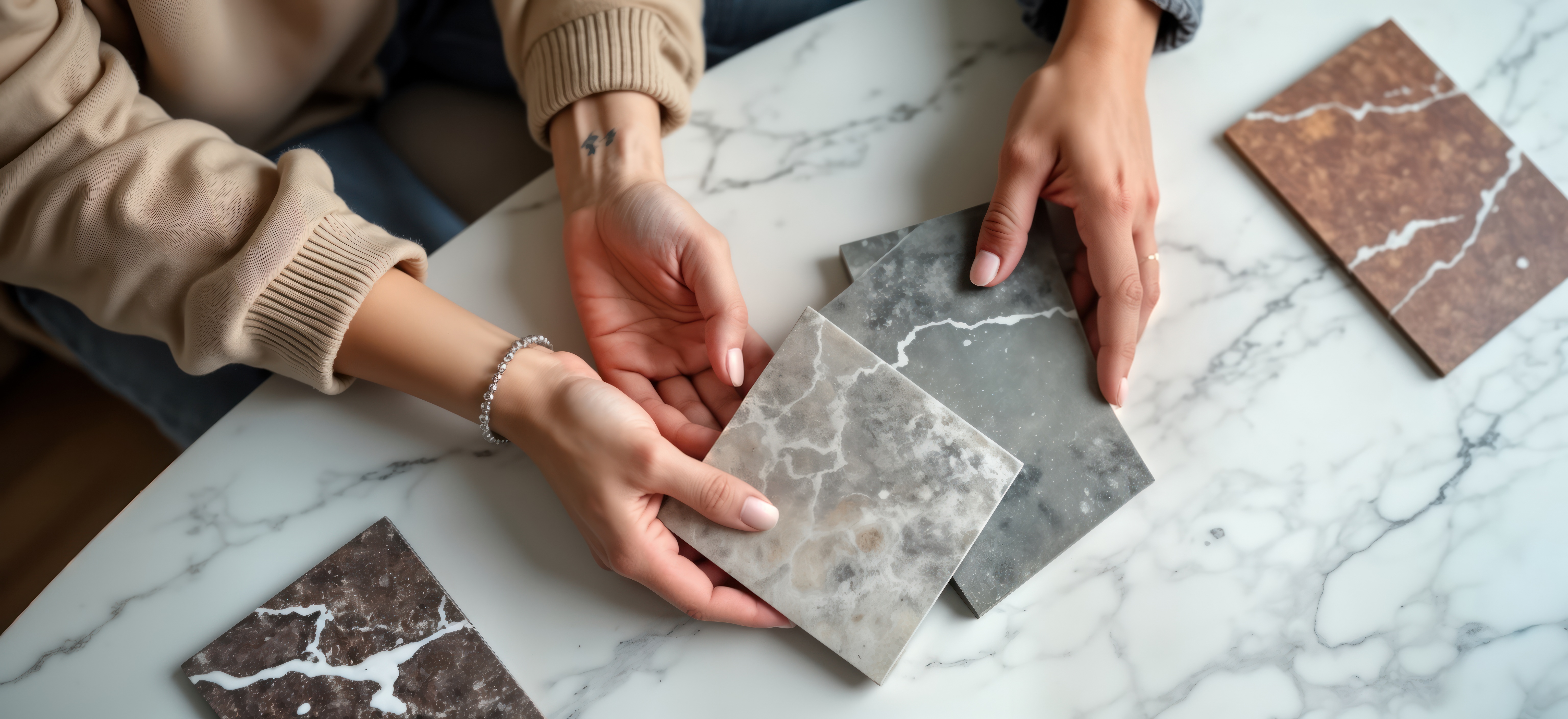
If you’ve ever finished a flooring project and stared at the leftover pieces in the garage, you’re not alone. Those extra cuts often feel too useful to throw away, but too random to store forever. The good news is that many of them can become practical upgrades around your home, especially when you think beyond the floor and start looking at small surfaces, wet areas, and spots that need a little more durability.
Why leftovers are worth saving
Tile and stone are tough materials, which is exactly why they work so well in small follow-up projects. A few pieces can protect a wall behind a utility sink, cover a tabletop, or give a mudroom corner a surface that’s easier to wipe down after snowy boots and road salt come inside. In homes around Sterling Heights, where winter mess and summer humidity both take a toll, using durable materials in the right places can save you maintenance later.
It also helps to sort what you have before you make plans. Porcelain and ceramic are often the easiest to reuse because they’re consistent in size and simple to clean, and you can compare styles in our tile flooring catalog if you want to match your leftover pieces with a larger room update. Natural materials can be just as useful, but they usually look best when you lean into their variation instead of trying to make every cut look identical.
Small projects that actually make sense
The best reuse ideas are the ones that solve a real problem. A few leftover pieces can become a backsplash behind a laundry sink, a plant stand top, a tray for pet bowls, or a border around a fireplace hearth. If you have larger offcuts, they may even work for a basement bar surface or a simple entry bench insert. The key is to choose a project that fits the amount and shape of what you already have, instead of forcing the material into something too ambitious.
Stone remnants are especially good for accent work because texture and color variation already feel intentional. If you’re working with slate, travertine, or marble, browsing our natural stone selection can help you see how mixed tones are used well, rather than hidden. That same principle applies in a home project: smaller areas often benefit from a little character.
When reuse looks custom instead of patched together
A reused material project works best when it has a clear visual boundary. In other words, don’t make it look like a repair unless it actually is one. Frame the area, center the layout, and use trim, edging, or grout color to make the design feel complete. That matters even more in places like Warren or Troy, where many homes mix older layouts with updated finishes. A thoughtful detail can make a leftover piece feel intentional instead of leftover.
It also helps to borrow ideas from finished spaces before you start cutting and setting. Looking through our flooring inspiration gallery can give you a better sense of scale, contrast, and pattern direction, especially if you’re trying to decide whether a simple grid, staggered layout, or mosaic-style arrangement makes the most sense.
A few smart limits to keep in mind
Not every extra piece needs a second life. Chipped edges, heavily mismatched dye lots, or slick polished stone in a spill-prone area may create more frustration than value. If a project needs exact sizing, waterproof prep, or a seamless transition into an existing room, it may be better to treat leftovers as accents and start fresh for the main surface. Reuse should make your home more functional, not create a patchwork problem you’ll want to redo later.
And if you’re not sure whether your extras are enough for a project, that’s where experience really helps. We’ve worked with all kinds of homes across Macomb County, from older ranch layouts to newer builds with finished basements, so we know how to spot the difference between a smart reuse idea and one that will fight you every step of the way.
A few well-used leftovers can add function, personality, and durability in places you might otherwise overlook. If you’re planning an update and want help choosing materials that work beautifully the first time and still leave you options later, you can request a free in-home estimate.