

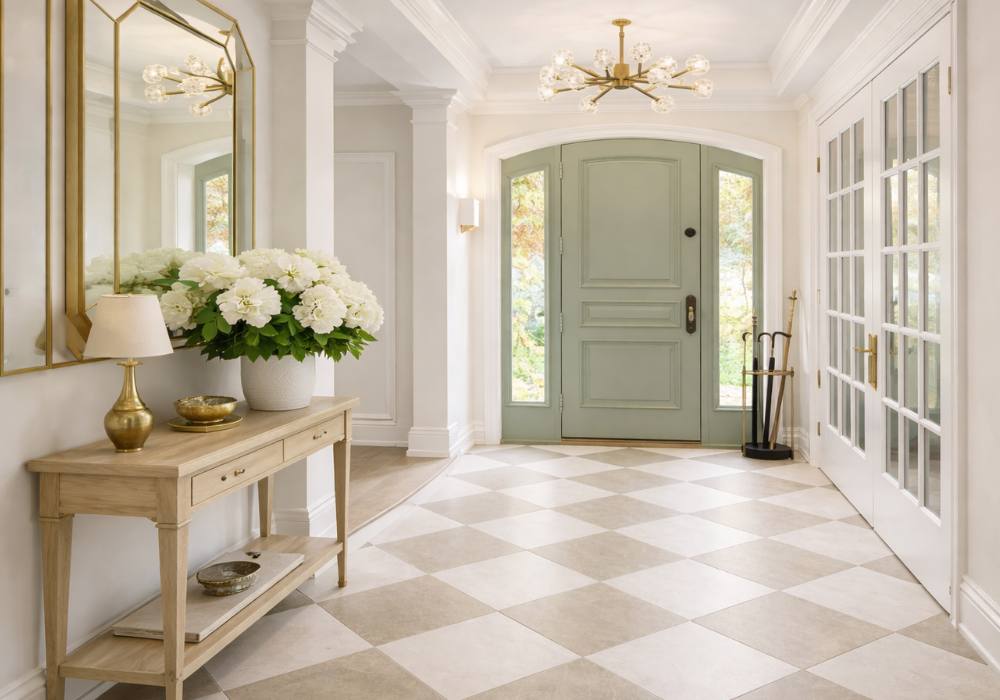
You know that first step inside the door where everyone drops boots, sports bags, and mail? If that spot is always wet, gritty, and cluttered, you feel it every single day. That’s why planning tile floors for an entry or mudroom isn’t just a style choice — it’s about making your life easier in a high-traffic zone.
Below are the big decisions to think through before you pick a tile and book an install.
Choose the right tile type for real-life traffic
Entryways in our four-season climate see snow, road salt, mud, and summer dust, often in the same week. You want a surface that shrugs all of that off.
Porcelain is usually the workhorse in these spaces. It’s dense, highly water-resistant, and less likely to chip when someone drops a backpack or a set of keys. Ceramic can work well too, especially on walls or in lighter-use side entrances. If you’re not sure which direction to go, it helps to compare finishes, sizes, and slip-resistance in our tile flooring selection, since you can filter by material and style.
Large-format tiles (like 12x24) create fewer grout lines, which means less scrubbing and a cleaner look. Smaller mosaics can give you more traction and design detail, especially on steps or a small vestibule.
Key idea: Pick a tile that can handle water, grit, and dropped gear without constant babysitting.
Plan for traction, grout, and everyday messes
A beautiful floor that’s slippery when wet is a problem in an entryway. When you’re browsing options, look for a matte or textured finish so wet boots and paws have more grip. Many manufacturers publish a slip-resistance rating; in a busy household, it’s worth paying attention to that number.
Grout color and width matter more than most people realize. Light grout in front of an exterior door will darken quickly from dirt. Medium or darker tones tend to hide everyday grime much better, and a slightly wider joint can add character while giving you a bit more traction underfoot.
If the rest of your main level is hardwood, you might like the idea of carrying that look into the entry while upgrading durability. Wood-look planks in tile or stone pair nicely with refinished wood in nearby rooms, and our detailed hardwood refinishing process can help tie the whole level together if your existing floors need a refresh.
Key idea: Texture plus smart grout choices add safety and keep the “mess zone” from looking dirty all the time.
Design the layout around how your family actually moves
Before you fall in love with a pattern on a screen, think about how you and your family move through the space. Do you come in from the garage or the front door most often? Where do shoes and backpacks actually land?
Here are a few layout tricks that help in lived-in homes:
- Run tiles in the direction of travel from the main door to reduce visual “choppiness” and make the space feel longer.
- Use a border or change in pattern to define a drop zone where shoes and wet gear should land.
- Consider a darker “runway” from the entry to the rest of the house to disguise heavy traffic.
If you’re more visual, it can be helpful to scroll through room scenes in our flooring inspiration galleries and note which layouts feel calm versus busy — then adapt those ideas to your own foyer or mudroom.
Key idea: Let your daily traffic patterns dictate layout, not the other way around.
Think beyond the floor: storage, heat, and transitions
Tile solves the moisture problem, but planning the whole zone is what makes it truly low-stress.
Built-in benches, cubbies, and wall hooks keep clutter off the floor so you’re not constantly tripping over shoes. A small cabinet or basket by the door for keys and mail reduces the piles that collect on any flat surface.
If you’re worried about cold tile in winter, talk with us about underlayment and heating options during planning, not after the fact. Good prep also includes proper transitions into adjacent flooring, especially where tile meets carpet, vinyl, or wood. When you’re juggling different materials and services throughout the house, it can help to have one team coordinate everything from flooring services to installation details so nothing gets missed.
Key idea: Storage, warmth, and clean transitions turn a hard-working tile floor into a welcoming entry.
When you plan the right material, finish, layout, and storage together, your entry or mudroom stops being a stress point and starts working quietly in the background. If you’re ready to talk through options for your own home, you can connect with our team and request a free estimate to start mapping out a tile plan that fits your everyday life.