

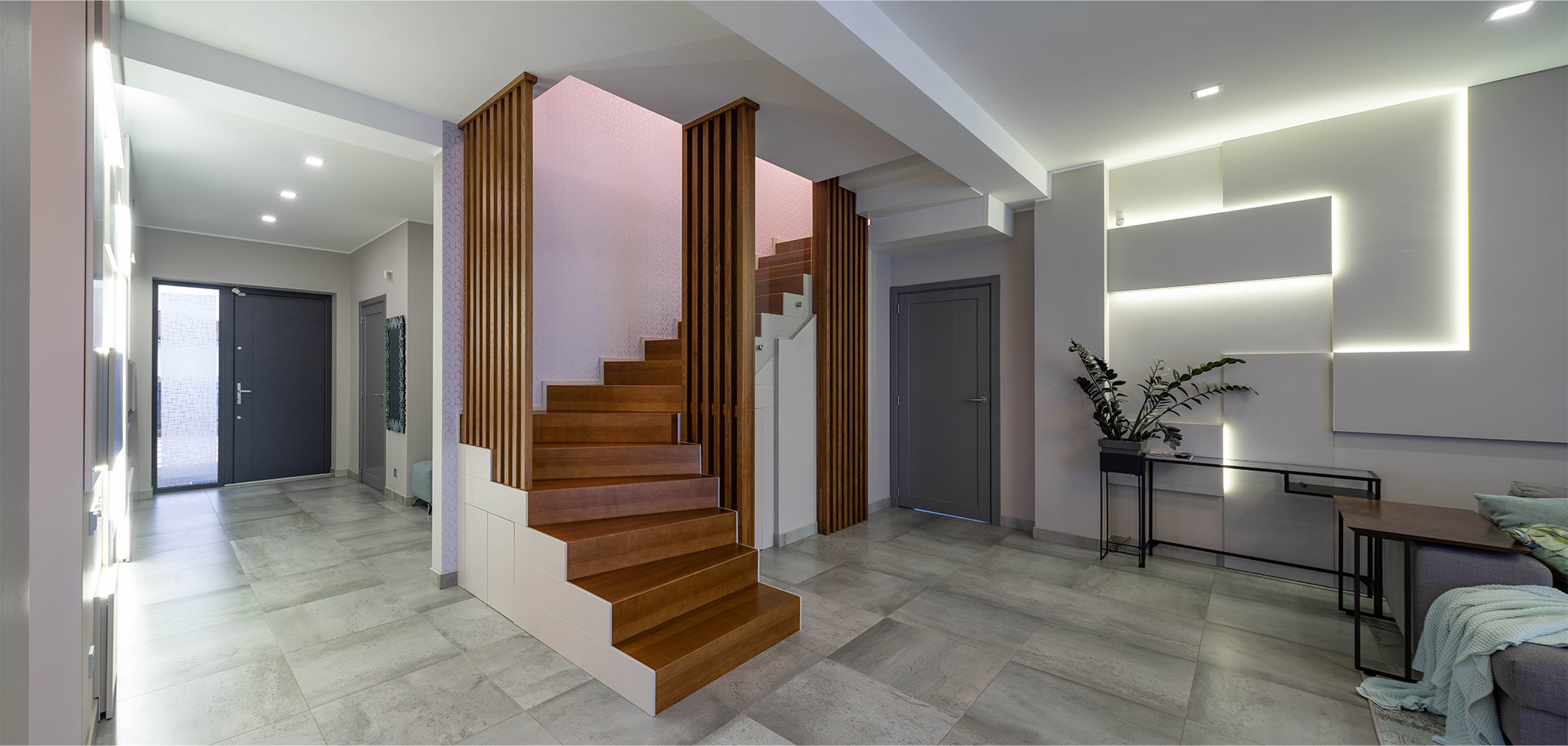
If you’ve ever walked down your stairs in socks and thought, “This feels a little sketchy,” you’re not alone. Open stairways and landings look beautiful, but they work hard too — especially with kids, pets, and Michigan winters bringing in salt and slush. Planning tile or stone for these areas takes a bit more thought than a simple hallway or bathroom.
Let’s walk through what you’ll want to consider so your stairs look amazing and feel safe for everyday life.
Safety First: Traction, Edges, and Code Basics
On stairs, slip resistance matters more than almost anything else. Polished porcelain or mirror-smooth marble may be stunning on a bathroom floor, but on a staircase they can feel like ice underfoot.
When you’re comparing materials, look for:
- Textured or matte finishes that add grip, especially on treads and the landing
You can see how different finishes and sizes play together by browsing our tile flooring options and noticing which ones have subtle texture or anti-slip surfaces that would translate well to a staircase.
Edges are the other big safety piece. On an open stairway, you’ll want either bullnose pieces, stair noses, or carefully finished edges so there are no sharp corners where feet or socks catch. A good installer will also keep grout joints consistent so each step feels the same underfoot, which helps you walk naturally without thinking about it.
Planning the Look: Flow Between Levels
Open stairways are visible from multiple angles, so the flooring becomes a design element, not just a surface you walk on. The goal is visual flow: what you choose on the landing should make sense with the floors above and below.
You can go a few directions here:
- Match the main-floor tile, so the stairs and landing feel like an extension of that space
- Use a coordinating stone or porcelain on the treads and landing that echoes colors from your kitchen or living room
- Add a subtle border or pattern on the landing to define it without making it feel busy
If you’re drawn to the character of marble, travertine, or slate, it can help to compare patterns and veining in a dedicated natural stone collection so you can see what will feel timeless when you’re looking down the stairway every day.
Because we live with four true seasons, think about how your choices will look in bright summer light and on gray winter days. Softer, mid-tone colors tend to hide dust, salt, and footprints better than very dark or very light surfaces.
Practical Details: Noise, Comfort, and Cleaning
Tile and stone on stairs will always feel firmer and cooler than carpet, but a few smart decisions can make them comfortable and practical.
Underlayment and installation methods can help with impact sound so things don’t feel echoey when someone runs up or down. Grout color also matters more than most people realize. A mid-tone grout line will disguise daily dirt far better than bright white, especially near entry doors or basement stairs.
In our area, snow and road salt like to collect at entries and on lower landings. Choosing a finish with a bit of texture and a pattern that isn’t perfectly uniform will make those little messes far less noticeable between cleanings. If you’re curious how different materials hold up in active homes, it’s worth taking a look at our customer reviews to see what other families mention after living with their new floors.
If you’re mixing materials — for example, hardwood on the main level and tile on the landing — make sure the finished heights line up. That usually means planning transitions carefully so there’s no lip to trip on where the staircase meets each floor. When hardwood is involved, some homeowners even refinish it at the same time so color and sheen blend nicely; if that’s on your mind, you can see how we handle that work in our hardwood refinishing process.
Getting from Idea to Finished Stairs
Once you’ve narrowed down a look, the next step is measuring and layout. Open stairways often include angled steps, metal railings, or partial walls, which all affect how cuts are made and where grout lines should fall. A good installer will plan the layout so the most visible edges get full or nearly full pieces, and any tricky cuts are tucked into less noticeable spots.
Many homeowners find it helpful to start with photos to clarify what they like. If you’re more of a visual person, spending a few minutes in our flooring inspiration galleries can give you ideas for how tile and stone can wrap from a landing onto the stairs and into the next room.
When you’re ready to talk through the details — slip resistance, edge trims, patterns, and what fits your budget — you can request a free estimate, and we’ll help you plan a stairway and landing that look great and feel safe every day.