

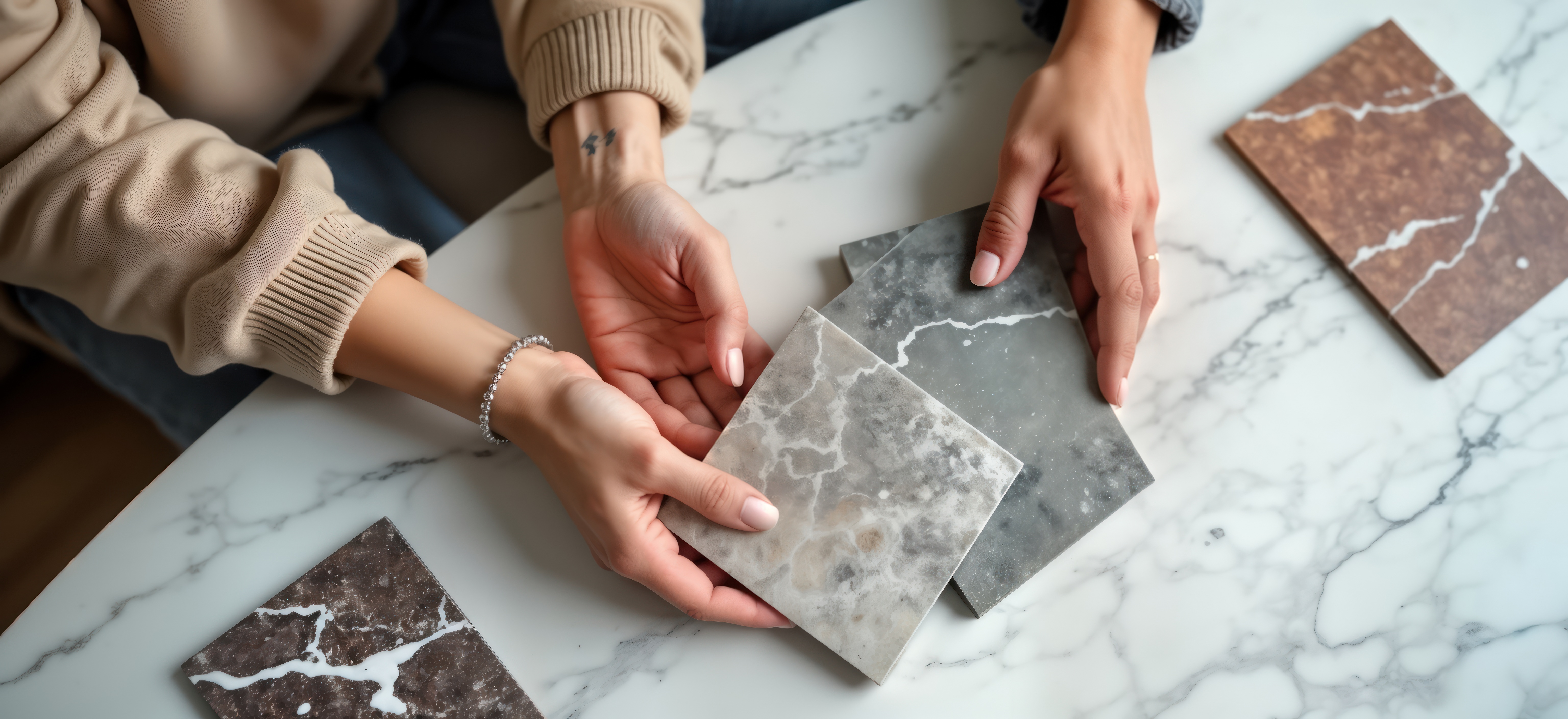
You love your hardwood, but maybe your kitchen or entry really needs tile. The tricky part is figuring out how to add new flooring without making your home look chopped up or “patched together.” When hardwood runs into tile the wrong way, you notice the mismatch every time you walk past it.
Let’s walk through how to pair tile with existing wood so the transition looks intentional, not like an afterthought.
Step 1: Match the Mood, Not Just the Color
When you’re adding tile next to hardwood, you don’t have to copy the exact wood tone. What matters more is matching the overall mood of the space.
Ask yourself:
- Is your hardwood warm and traditional, or cool and modern?
- Do you see a lot of grain and texture, or is it smooth and clean?
- Is your home mostly light and airy, or cozy and dramatic?
If your wood floors are warm and classic, try a porcelain or ceramic tile with soft beiges, creams, or warm grays. For cooler, contemporary planks, look at tiles with straight, simple patterns and cooler undertones. You can browse materials and tones that work well with both traditional and modern homes in our tile flooring catalog.
The goal is for the tile to feel like it belongs in the same family as your hardwood, even if the colors aren’t identical.
Step 2: Get the Heights and Layout Right
The cleanest transitions happen when both surfaces sit at the same height. If your hardwood is thicker than the tile you like, we can build up the tile with the right underlayment so there’s no awkward lip to trip over.
Layout matters too:
- Run wood planks into the tiled area, not stopping them in a random spot.
- Avoid tiny slivers of tile at the doorway; they draw the eye to the transition.
- Keep grout lines and plank direction in mind so the two materials don’t visually “fight.”
If your wood is older and a little tired, this can be a great time to freshen it up so the new tile doesn’t make the existing floor look worn. Our team can walk you through options like a full hardwood refinishing process if your boards need new life before you add tile.
Step 3: Choose the Right Transition Piece
You have a few ways to bridge the line where wood meets tile, and each gives a slightly different look:
- Flush transition – Both surfaces meet cleanly with a thin grout or caulk line. This feels seamless and modern when heights are perfectly matched.
- Wood threshold or T-molding – A slim strip of wood that echoes your existing planks. This works well if the two surfaces are close in height but not identical.
- Reducer – A gently sloped piece that makes a safe, smooth step down when one surface is noticeably higher.
In Michigan homes where winter boots bring in salt and slush, a slightly raised threshold can actually help hold water in the tiled area instead of letting it creep onto your hardwood.
If you want to see how other homeowners have blended materials, our flooring inspiration galleries are a helpful way to compare different transition looks before you commit.
Step 4: Think About How You Actually Live
The “right” match also depends on how your household uses each room. Busy kitchens, mudrooms, and basement entries usually need durable, easy-to-clean tile, while nearby living spaces stay warm with wood.
In older ranch homes and newer builds alike, we often see:
- Tile in the kitchen flowing into hardwood in the dining room
- Tile in the front entry stopping cleanly at a wood hallway
- Basement tile transitioning to wood-look products upstairs for continuity
If you’re not sure which material belongs where, it can help to talk through your daily routine and what your floors deal with in each season. Our full range of flooring services is built around that kind of practical planning, not just picking something that looks good in a sample.
When tile and hardwood are planned together, the transition almost disappears and your home feels more open and connected. If you’re ready to update a kitchen, hallway, or entry and want help getting that seamless look, you can start by sharing a few details about your project through our free estimate request, and we’ll help you map out the best way to blend your new tile with the wood you already love.