

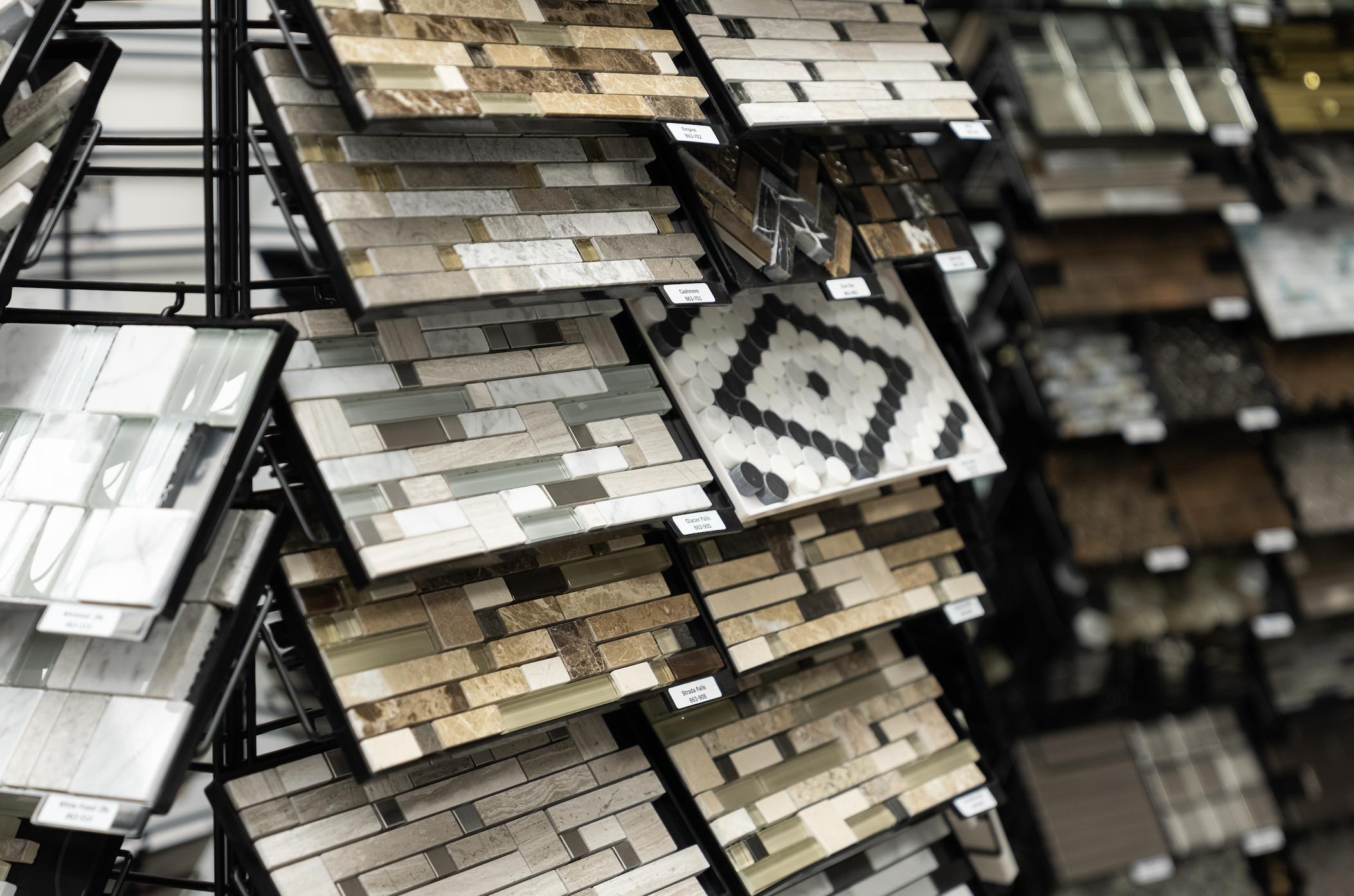
You pick a gorgeous backsplash sample, you love your floor… and then you hold them next to each other and think, “Why don’t these work together?” If you’ve ever stood in a kitchen or bath aisle with a stack of samples and zero confidence, you’re not alone. Getting a backsplash and floor to feel like one intentional design instead of two random choices is tricky, but once you know a few rules, it gets much easier.
Below, we’ll walk through how to match tile backsplashes with stone or tile flooring so your space feels pulled together, not busy or flat.
Start With One Star, Then Support It
The biggest mistake we see is trying to give both the floor and backsplash “main character energy.” If the floor has strong veining, pattern, or color, let that be the star and keep the backsplash quieter. If the backsplash is bold, keep the floor more relaxed.
A simple way to check this: lay your samples side by side and squint. If your eye bounces back and forth and you can’t tell what to look at first, something needs to calm down.
- Busy floor, simple backsplash: Think a dramatic marble-look porcelain or real travertine on the floor with a clean subway or large-format wall tile in a soft, solid color.
- Simple floor, statement backsplash: A neutral porcelain floor in a matte finish pairs beautifully with a patterned mosaic or textured wall tile.
If you’re not sure which surface should lead, it can help to browse a few room scenes. Our flooring inspiration galleries show real-life pairings of tile, stone, and other materials so you can see how designers balance “star” and “supporting” surfaces.
Match Undertones, Not Exact Colors
You don’t have to find a backsplash that’s the exact same beige or gray as your floor. In fact, that can look flat. What matters more is that both materials share a similar undertone.
For example, if your stone floor leans warm with creamy, golden, or taupe veining, look for backsplash tiles that also feel warm rather than icy or blue-gray. Cool-toned porcelain floors with hints of blue or charcoal pair best with crisp whites, soft grays, and cooler neutrals on the wall.
When you’re comparing options, try this:
- Put the floor and backsplash samples right next to each other on a white sheet of paper.
- Ask yourself: do they both feel cozy and warm, or clean and cool?
- If one looks yellowed and the other looks bluish, they’ll probably clash once installed.
You can see a wide range of warm and cool options in our tile flooring catalog, from soft concrete looks to richer stone visuals that work beautifully under kitchen and bath backsplashes.
Play With Texture and Finish for Balance
In homes around the northern suburbs, kitchens and mudrooms do a lot of work—snow, road salt, and summer humidity all show up on your floors. That’s one reason we often suggest a matte or honed finish for the floor, and then bring in a bit more texture or sheen on the backsplash.
A few combos that usually look great:
- Matte porcelain floor + glossy subway backsplash
- Honed natural stone floor + slightly textured ceramic wall tile
- Subtle stone-look tile floor + small-scale mosaic accent behind the range
Mixing finishes keeps the space from feeling flat, but you still want them to feel like cousins, not strangers. So if the floor has a very rustic, tumbled look, a highly polished, ultra-modern backsplash likely won’t feel cohesive.
If you’re drawn to real marble, slate, or travertine, our natural stone flooring collection is a good place to explore different finishes and see how each one might influence your backsplash choice.
Think About Room Size, Light, and Cleaning
Beyond looks, think about how you actually use the space.
- Small or darker kitchens: Lighter floors and backsplashes with a bit of sheen can bounce light around and make the room feel bigger. In that case, keep patterns softer so the room doesn’t feel busy.
- Open-concept layouts: If your kitchen opens into a living area, make sure the floor works with both the backsplash and the adjacent room. Neutrals on the floor with more personality on the wall often feel safer in these spaces.
- Cleaning and maintenance: Backsplashes near cooktops can handle smaller tiles and more grout because they’re vertical and easier to wipe. Floors see grit and spills, especially in winter, so larger tiles and slightly darker grout can be more forgiving.
If you’d like help pulling your ideas together, our team is happy to look at photos, talk through how you use your kitchen or bath, and help you narrow down samples at our Sterling Heights showroom.
When you get the balance right between floor and backsplash—one leading, one supporting, with matching undertones and complementary textures—your kitchen or bath just feels “right” every time you walk in. If you’re ready to see how different combinations could work in your home, you can share a few details about your project and request a free estimate; we’ll help you choose a pairing that looks great and stands up to everyday life.