

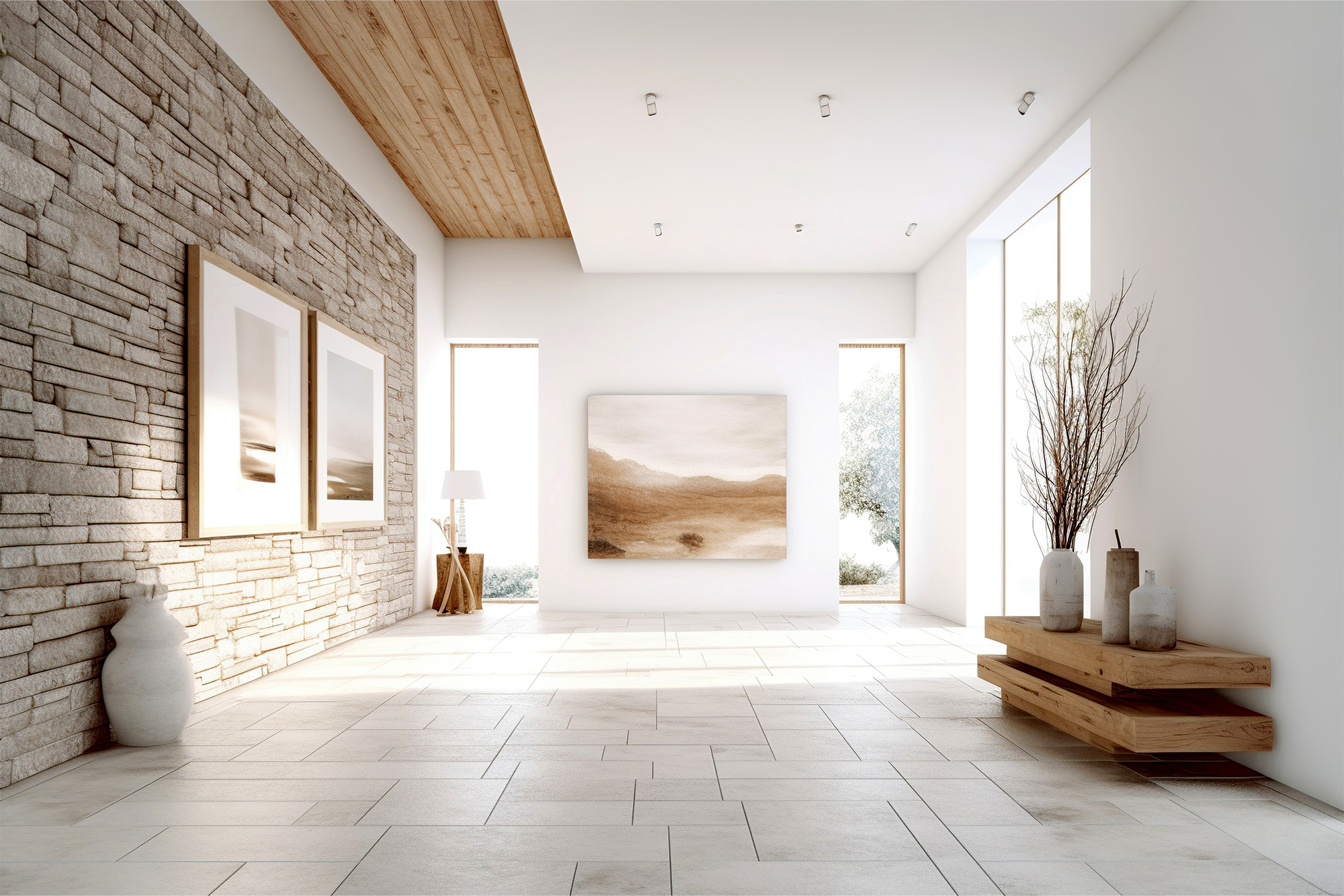
Hallways don’t usually get much attention until they feel a little too plain or a little too worn out. If you’re updating one, this is where custom tile borders and inlays can make a big difference. A long, narrow space can start to feel more intentional when the floor has a pattern that guides the eye instead of just covering the surface.
That’s also why hallways are such a smart place to get creative. Unlike a large open room, this area gives you a natural path to work with. A border can frame the walkway and make it feel cleaner and more finished, while an inlay adds a focal point without overwhelming the rest of your home.
Start with the shape of the hallway
The best designs usually begin with the layout, not the pattern. A straight hallway often looks great with a simple border that runs parallel to the walls because it reinforces the length of the space. If your entry connects to bedrooms, stairs, or a mudroom, an inlay near one of those transition points can help the whole floor plan feel more connected.
Material choice matters just as much as the pattern itself. Porcelain is often the easiest option for busy households because it handles traffic well and comes in a wide range of looks. If you want to compare color, size, and finish options before committing to a layout, it helps to browse our tile flooring selection and see how different styles can support either a subtle border or something more decorative.
Keep the design detailed, but not busy
One of the biggest mistakes in hallway flooring is trying to do too much in a tight space. A custom inlay should add personality, not visual clutter. That usually means choosing one main field tile, then introducing contrast through scale, shape, or tone. A darker outline around a lighter center can feel elegant and grounded, while a geometric insert works well if the surrounding finishes are fairly simple.
Natural stone can bring in even more character when you want the floor to feel rich and layered rather than polished and uniform. Marble, slate, and travertine all create a different mood, and each one changes the look of the border in its own way. If you’re considering that route, our natural stone flooring gallery is a useful place to explore surfaces that work especially well in custom layouts.
Think about the rest of the home
A hallway shouldn’t feel disconnected from the rooms around it. The border, grout color, and overall tone should relate to nearby finishes so the design feels intentional from one area to the next. In many homes around Sterling Heights, MI, that means balancing older architectural details with updated materials. A classic pattern can respect the character of the house while still giving it a fresh look.
This is also where inspiration helps. Seeing finished spaces makes it easier to decide whether you want something formal, understated, or a little more artistic. Our flooring inspiration gallery can help you narrow down what fits your home before you start selecting exact pieces.
Plan for everyday life, not just the first impression
Hallways take a beating. Shoes, moisture, pets, and daily traffic all show up there first, especially in Southeast Michigan where wet winters and humid summers can be hard on floors. A beautiful inlay has to do more than look good on installation day. It should still make sense for the way you live.
That’s why we always recommend thinking through maintenance, slip resistance, and transitions at the same time you’re choosing the design. The right layout is one that still feels practical after months of real use, whether you’re in Warren, MI or a nearby suburb with the same mix of weather and foot traffic.
A custom border or inlay can turn a pass-through area into one of the most memorable parts of your home. If you’re ready to talk through ideas, materials, and what will work best in your space, you can request a free in-home flooring estimate.