

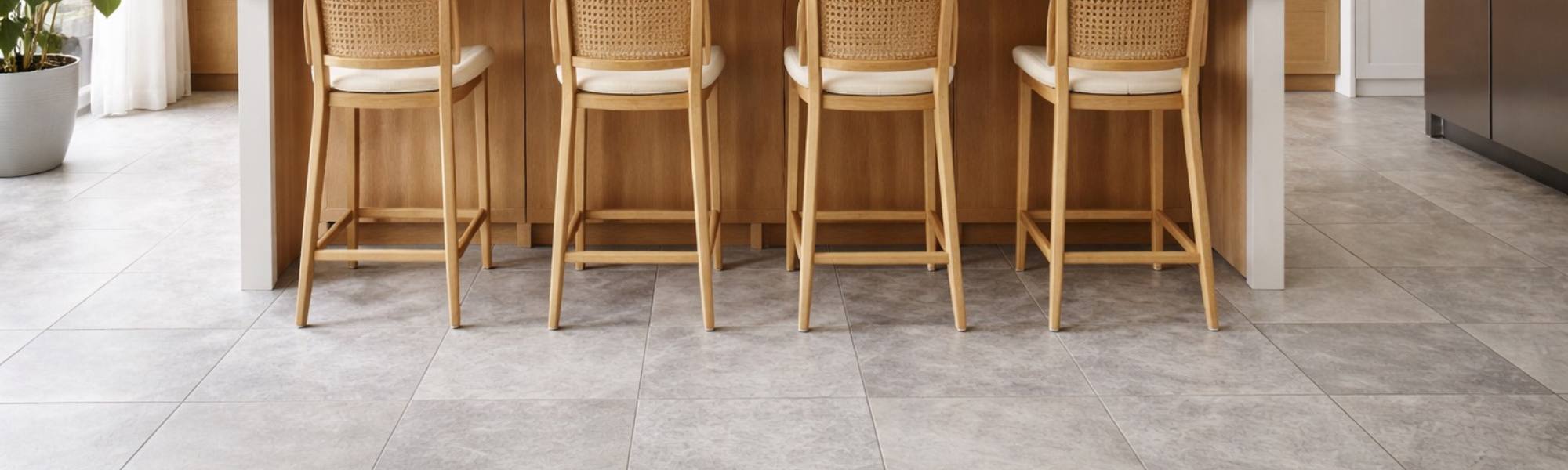
You’ve fallen in love with those big, sleek tiles you see in magazines — fewer grout lines, a clean modern look, perfect for a kitchen, bath, or basement. But then you hear someone say, “Large-format tile is picky about subfloors,” and suddenly you’re wondering if your home is even a good candidate.
Let’s walk through what really matters so you can decide if those oversized tiles will work in your space before you spend a dime.
What Counts as “Large-Format” Tile — And Why Subfloors Matter More
In tile world, anything with a side longer than about 15 inches is considered large-format. That includes today’s popular 12x24 rectangles and even bigger slabs that mimic marble or concrete.
The catch is that the bigger the tile, the less it forgives what’s underneath. With small pieces, minor dips and humps in the floor get hidden in the grout joints. With large panels, those same imperfections turn into:
- Edges that sit higher than the next tile (lippage)
- Hollow spots that can crack later
- Tiles that rock or feel uneven underfoot
Industry guidelines for big tile are pretty strict: you’re generally aiming for no more than about 1/8 inch of variation over 10 feet. That’s much flatter than what builders often consider “good enough” for carpet or even some hardwood, especially in older homes and finished basements.
If you’re browsing options like 12x24 porcelain or even larger panels, it helps to see what’s out there. Our online tile flooring selection lets you sort by size so you can focus on formats that fit your space and comfort level.
Quick Checks You Can Do on Your Existing Subfloor
You don’t need fancy tools to get a first read on whether your subfloor is large-format friendly. A few simple checks can tell you a lot:
- Straightedge test: Lay a long level, straight board, or even a piece of straight metal across the floor. Look for gaps under the middle or rocking at the ends. If you can easily slide a couple of stacked quarters under the straightedge, that’s a sign the area needs flattening.
- Knee feel test: Walk the room in socks and pay attention. Do you feel dips, humps, or soft spots? Those are trouble spots for big tile.
- Transition test: Check where your new tile will meet other flooring, especially at doorways. Large-format pieces need enough height to sit on a proper underlayment without creating awkward steps.
In many Metro Detroit homes, you’ll see more issues in basements (settling, minor slab waves) and in older kitchens where layers of old flooring have been added and removed over the years. None of this is a dealbreaker, but it does tell you how much prep might be needed.
Common Subfloor Types: What Works and What Needs Help
Different subfloors behave differently under large-format tile. Here’s how to think about the most common ones:
- Concrete slabs: Very strong, but not always flat. Hairline cracks are common and can usually be managed with the right products, but bigger cracks or heaving need more attention. Self-leveling compounds can turn a wavy slab into a tile-ready base if they’re applied correctly.
- Plywood over joists: You want solid, squeak-free framing with no bounce when you walk. For big tile, you’ll usually add a cement board or uncoupling membrane over the wood to create a stable surface and help prevent cracks.
- Existing tile or vinyl: Sometimes you can go over it, sometimes you really shouldn’t. It depends on how sound and flat the existing material is, and whether the extra height will cause issues with doors, appliances, and stairs.
If you’re thinking about mixing materials — for example, keeping hardwood in the living room and adding tile in the kitchen — the prep work might include some leveling and, in other areas of the home, even refinishing wood. Our step-by-step hardwood refinishing process shows how we bring older boards back to life when a project calls for blending surfaces.
When to Consider Alternatives or Extra Prep
Sometimes the subfloor can absolutely be brought up to large-format standards — it just takes more prep. Other times, it’s smarter to tweak the plan instead of fighting the structure of the house.
You might:
- Invest in floor leveling to get the ultra-flat surface big tiles demand
- Choose a slightly smaller format that’s more forgiving but still modern
- Mix in mosaic or smaller tiles in problem areas like shower floors, where slope and drains make giant pieces tricky
If your dream look leans more natural and you’re open to different materials, you can also explore large pieces in our natural stone collection for areas where stone makes sense and size options give you flexibility.
The important thing to remember is this: large-format tile isn’t “all or nothing.” With the right planning, you can often get the look you want in key rooms while choosing friendlier options where the structure makes life difficult.
If you’d like a second set of eyes on your subfloor before committing to those big beautiful tiles, we’re happy to take a look, measure, and talk through your options. You can start by requesting a visit through our online free estimate form, and we’ll help you figure out whether large-format tile, some extra prep, or a different format is the best fit for your home.